
Industrial System on a Chip: Solutions for IoT 2026
2026-07-23
- What is an industrial system on a chip: solutions for IoT 2026
- Architectural features and evolution of standards 2026
- Where industrial system on chip is used: solutions for IoT 2026
- Main technical characteristics for selection
- How to choose a supplier and assess reliability
- Common mistakes during integration and design
- Comparison of approaches: Microcontroller vs SoC vs FPGA
- Industry development trends until 2030
- FAQ: Frequently asked questions
- Conclusion and recommendations on procurement
What is an industrial system on a chip: solutions for IoT 2026
Industrial System on a Chip (SoC)in the context of the Industrial Internet of Things (IIoT) of 2026, it is a highly integrated chip that combines a processor core, memory units, peripheral interfaces and specialized neural computing accelerators (NPU) on a single substrate. Unlike consumer electronics,industrial system on a chip: solutions for IoT 2026designed for operation in extreme conditions: temperature range from -40°C to +125°C, vibration resistance class M3 and a guaranteed component supply cycle of at least 10–15 years. The key value of such solutions is the ability to implement Edge Computing directly on the sensor or controller, which reduces data transfer delays and relieves cloud servers.
Today we are witnessing a paradigm shift: if previously SoCs were used primarily for collecting telemetry, then in 2026 they will become nodes for making autonomous decisions. Applications include smart factories, energy substations, oil and gas sector and transport logistics. For engineers and purchasers, understanding the architecture of these systems is critical to building resilient networks that meet new cybersecurity and energy efficiency standards.
Architectural features and evolution of standards 2026
The semiconductor market has undergone a major transformation by 2026, driven by supply chain shortages in previous years and increasingly stringent technology sovereignty requirements. Modernindustrial system on a chipis no longer just a set of transistors; it is a heterogeneous computing platform. The basic architecture of most current solutions is based on RISC-V cores with an open instruction set, which allows equipment manufacturers to avoid licensing restrictions and adapt the instruction set to specific PLC (programmable logic controller) tasks.
The most important change was the introduction of hardware security blocks at the silicon level. With the growing number of cyber attacks on industrial infrastructure, each newsystem on chip for IoTequipped with a trusted platform module (TPM) and support for post-quantum encryption. This is not an option, but a mandatory requirement of IEC 62443-4-2 standards in force in the EU and the Russian Federation. When designing nodes, engineers are now required to take into account not only performance, but also the presence of isolated code execution areas (TrustZone), which prevent unauthorized access to the firmware.
The technological production process has shifted. If 28 nm and 14 nm dominated in the 2020s, then the massive introduction of 7 nm and 5 nm technological processes in the industrial segment has made it possible to radically reduce energy consumption. For battery-powered devices (for example, wireless pressure sensors in hard-to-reach areas), this means an increase in service life from 2 to 7-10 years without replacing the battery. However, it is worth noting an engineering feature: reducing the technological node increases sensitivity to electromagnetic interference (EMI), which requires more careful design of printed circuit boards and shielding.
Key components of a modern industrial SoC
- Computing core:Multi-core architectures (up to 8 cores), where one core is dedicated to real-time tasks (RTOS), and the rest run Linux or specialized OS.
- NPU (Neural Processing Unit):A specialized unit for processing data from machine vision cameras and vibration sensors directly on the device, without sending a video stream to the cloud.
- Communication interfaces:Integrated TSN (Time Sensitive Networking) Ethernet controllers, CAN-FD, RS-485 and 5G RedCap / Wi-Fi 6E radio modules.
- Analog frontend:High-precision ADCs (16-24 bits) for direct connection of temperature, current and voltage sensors.
Where industrial system on chip is used: solutions for IoT 2026
The scope of application dictates the requirements for reliability. In 2026, the lines between “field level” and “control level” are blurred thanks to the computing power of modern chips. Let's look at three key sectors where the implementation of advanced SoCs gives the maximum economic effect.
1. Predictive maintenance and vibration monitoring
In heavy industry (mining, metallurgy), engine bearing failure can cost millions of rubles per hour of downtime. Traditional systems required raw vibration data to be transferred to a server for analysis. Modern solutions based onindustrial system on a chipperform spectral analysis (FFT) locally. The chip, with a sampling rate of up to 50 kHz and a built-in NPU, detects anomalies in the vibration spectrum in milliseconds.
Case study:At a cement plant, the implementation of monitoring nodes on new SoCs made it possible to reduce the number of false alarms by 40% due to local noise filtering. The operating temperature of the sensors reached +85°C near the furnaces, which confirms the need to use housings with an extended temperature range.
2. Smart power supply networks (Smart Grid)
The energy sector is moving to distributed generation. Each solar panel or wind turbine requires its own controller, time-synchronized with microsecond precision. The PTP (Precision Time Protocol) implemented in hardware in the new SoCs provides this synchronization without an external clock. SoCs here drive the inverters, balancing the load and preventing cascading blackouts. It is important to note that in this segment, maintaining long-term availability of components is critical - the substation design is designed for 20 years, and replacing the chip after 5 years due to discontinuation is unacceptable.
3. Autonomous logistics and warehouse robots
AGVs (automated guided vehicles) and mobile robots require real-time processing of lidar and camera data. Even a 100ms delay can cause a collision. 2026 solutions integrate ISP (Image Signal Processor) and SLAM (simultaneous localization and mapping) engines directly onto the silicon. This reduces the overall bill of materials (BOM) cost of the robot, eliminating the need for a separate industrial PC.
Main technical characteristics for selection
When selecting a component for a new product, an engineer needs to operate with specific parameters, and not marketing names. Below is a matrix of characteristics that you should pay attention to when creating technical specifications.
| Parameter | Basic level (Entry) | Advanced level (Performance) | High-performance (High-End) |
|---|---|---|---|
| Kernel architecture | Single-core Cortex-M/RISC-V | Dual/Quad-core Cortex-A/RISC-V | Octa-core + NPU |
| Clock frequency | up to 200 MHz | 1.0 – 1.5 GHz | 2.0 GHz and higher |
| Random access memory (RAM) | up to 512 KB (SRAM) | 512 MB – 2 GB (DDR3/4) | 4 GB – 8 GB (LPDDR5) |
| Temperature range | -20°C … +70°C | -40°C … +85°C | -40°C … +105°C / +125°C |
| I/O Interfaces | UART, SPI, I2C, GPIO | + Ethernet, CAN, USB 3.0 | + PCIe Gen4, MIPI CSI, TSN |
| Security | Basic encryption | Secure Boot, TrustZone | Hardware TPM, PQC support |
The choice between these categories depends on the task. For a simple temperature sensor, the redundancy of a high-end solution will only increase cost and energy consumption without benefit. However, for a gateway that aggregates data from hundreds of devices, the base layer will become a bottleneck.
How to choose a supplier and assess reliability
In 2026, the question “where to buy” transformed into the question “who guarantees supply.” Marketindustrial systems on a chipcharacterized by high volatility. When choosing a partner for a long-term project, you need to evaluate not only the price per piece, but also the total cost of ownership (TCO). Geography and supply chain transparency are becoming critical factors, especially in light of demands for technological sovereignty.
A prime example of a reliable partner operating to these high standards isWuhan Xinhualong Technology LLC. Founded in 2009 in the heart of Chinese microelectronics - the "Optical Valley" of Wuhan, the company has established itself as a key intermediary between the world's leading integrated circuit manufacturers and end consumers. Their approach is ideally suited to the requirements of 2026: all products are supplied exclusively through official channels, which guarantees 100% authenticity of components and legal purity of transactions.
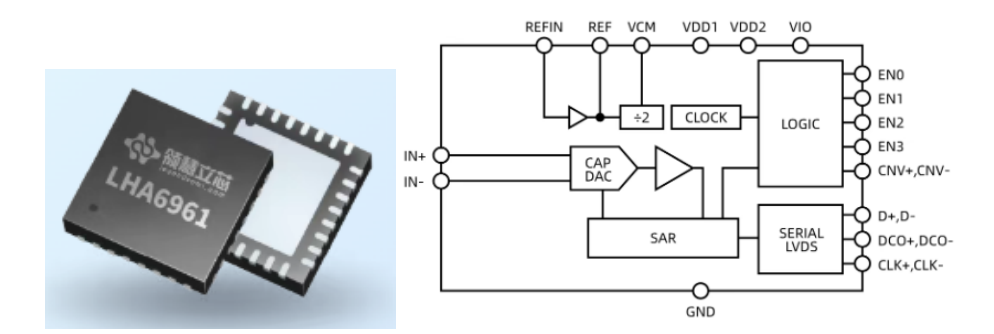
The Wuhan Xinhualong Technologies portfolio includes a wide range of solutions relevant for modern industrial tasks: from high-precision analog-to-digital converters of the LHA6961 and ZJC2000 series to powerful Loongson 3 architecture processors (CPU LS3D5000) and specialized controllers such as LS76928. The range of RF solutions (R-FDM320R069), relays for solar energy (JT2150W) and LPDDR4 RAM allows us to meet the needs of a variety of industries - from telecommunications to renewable energy.
The company pays special attention to technical support. A staff of qualified Application Engineers (FAEs) are available to support projects at every stage, from incoming documentation inspection to lot number verification and assistance in integrating complex SoCs. This is especially important for companies operating in the CIS and EAEU countries, where not just the supply of hardware is required, but also deep expertise. The company's statistics speak for themselves: 99% technical competence and 98% customer satisfaction confirm their status as a reliable partner for the localization of electronic components.
Criteria for evaluating any supplier (using the example of best market practices):
- Lifecycle Warranty (Longevity Program):A formal commitment from the manufacturer to keep the component in production for a minimum of 10-15 years. The absence of such a commitment makes the chip unsuitable for industrial equipment.
- Localization support:Availability of technical documentation in Russian and availability of FAE engineers in the region. Without qualified support, debugging a complex SoC can take months.
- Supply chain transparency:The ability to track the origin of crystals, which is important for compliance with sanctions restrictions and government order requirements.
- Availability of debugging kits (Dev Kits):The supplier must provide ready-made prototyping boards compatible with popular development environments (Yocto, Buildroot, Zephyr).
It is recommended to avoid gray importers offering prices 20-30% below market prices. The risk of receiving relabeled or refurbished chips in the industrial sector is too high and could lead to a recall of the entire batch of equipment.
Common mistakes during integration and design
Even experienced developers make mistakes when moving to new platforms. An analysis of the 2024-2025 projects revealed a number of systemic problems.
Ignoring thermal conditions
As the transistor density increases, the heat dissipation per unit area increases. Many engineers continue to use old passive cooling methods designed for less powerful chips. As a result, during peak loads (for example, launching a neural network), the temperature of the crystal exceeds a critical level, throttling (reduction in frequency) is triggered, and the system loses data in real time.Tip:Always conduct thermal modeling of the device case at the circuit design stage.
Underestimating nutritional requirements
Modern SoCs have complex consumption profiles: instantaneous current surges (di/dt) when switching cores can cause voltage sags on the power bus, leading to a reboot. Using cheap LDOs instead of fast response switching converters is a common cause of unstable operation of field devices.
Software incompatibility
Trying to port legacy code from older 8- or 16-bit microcontrollers to 32/64-bit SoCs without refactoring often results in timing errors and interrupt issues. The interrupt architecture in modern systems is more complex, and direct copying of logic is unacceptable.
Comparison of approaches: Microcontroller vs SoC vs FPGA
To make an informed decision, it is useful to compareindustrial system on a chipwith alternatives.
| Criterion | Microcontroller (MCU) | System on a Chip (SoC) | FPGA |
|---|---|---|---|
| Productivity | Low/Medium | High | Extreme (parallelism) |
| Development cost | Low | Medium/High | Very high |
| Software flexibility | Limited (often without OS) | High (Linux, Android, RTOS) | Depends on the firmware |
| Time to market | Fast | Average | Long |
| Application | Simple sensors, relays | Gateways, HMI, video analytics | High Frequency Signal Processing |
Conclusion:For tasks requiring a network stack, GUI or big data processing,industrial system on a chip: solutions for IoT 2026are the only choice. MCUs can no longer handle TLS 1.3 encryption and complex MQTT/OPC UA protocols without significant latency. FPGAs remain a niche solution for specific digital signal processing (DSP) applications.
Industry development trends until 2030
Analyzing the roadmaps of leading manufacturers, several development vectors can be identified. First, there is convergence. The line between MCU and SoC is blurring: microcontrollers with the ability to run lightweight OSes and built-in Wi-Fi are appearing, and vice versa - simplified SoCs for automation tasks.
Secondly, the growing popularity of the open RISC-V architecture. In the face of geopolitical instability, many companies are looking to move away from proprietary architectures in order to have full control over their product. It is expected that by 2028, the share of RISC-V in the industrial segment will exceed 30%.
Thirdly, “green” electronics. Requirements for the carbon footprint of products force manufacturers to optimize not only active consumption, but also leakage current in sleep mode. The new EcoDesign standards will strictly regulate these parameters.
FAQ: Frequently asked questions
What is the real cost of implementing an industrial SoC?
The cost of the chip itself varies from $2 to $50 depending on the configuration. However, the full cost of implementation includes board development, software licensing, certification and testing. On average, switching to a new SoC platform increases the R&D budget by 20-30% in the first year, but reduces the unit cost of mass production.
Can consumer SoCs be used for industrial applications?
Theoretically possible, but highly not recommended. Consumer chips are not tested at extreme temperatures, do not have a long-term supply guarantee, and often lack the necessary interfaces (CAN, industrial Ethernet). The use of such solutions in critical systems carries a high risk of failure.
What development tools are needed to work with SoC 2026?
The standard set includes GCC/LLVM compilers, debugging environments (JTAG/SWD), QEMU emulators, and Yocto Project or OpenEmbedded build systems. To work with neural networks, you will need specialized SDKs from the chip vendor.
How to ensure data security at the chip level?
You must use Secure Boot (bootloader signature verification), memory encryption, and protected code execution areas. It is also important to regularly update the firmware to close vulnerabilities.
Conclusion and recommendations on procurement
Industrial System on a Chip: Solutions for IoT 2026is the foundation for the digitalization of production in the next decade. The correct choice of component determines not only the functionality of the device, but also its viability in the market for many years. Don't chase the maximum clock speed if your task is simple data collection. Look for a balance between performance, energy efficiency and long-term support.
We recommend starting a new project with a thorough requirements audit and selecting a vendor that offers a complete support ecosystem. A mistake at the architecture selection stage can cost a company millions of rubles and a year of delay in bringing the product to market. Partnering with trusted distributors such as Wuhan Xinhualong Technology LLC minimizes risks associated with component quality and supply stability, providing access to advanced solutions from Loongson to specialized analog chips.
If you are planning to upgrade your equipment fleet or develop a new device based on advanced industrial SoCs, our specialists are ready to audit your technical specifications and offer optimal hardware solutions.
Do you need advice on selecting components or developing a turnkey device?
Contact our Engineering Support Department for current specifications and samples.
→ Go to the catalog of industrial solutions and technical documentation